
December 18, 2025
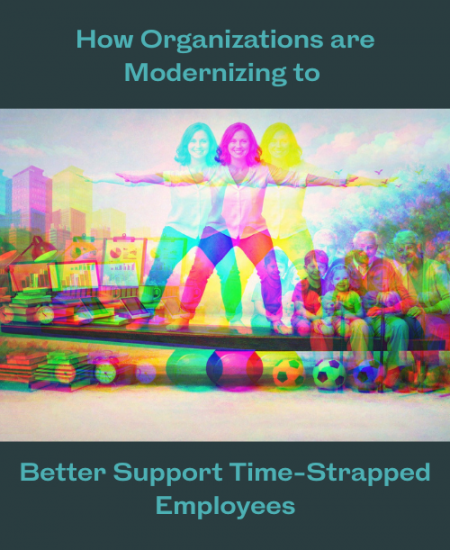
The needs previously handled by stay-at-home parents, particularly mothers, haven't gone away and are rapidly infiltrating today's workforce. To alleviate these strains, modern workplaces are focusing on implementing various policies and creating supportive environments.
Here’s a breakdown of how organizations are modernizing to support working parents and caregivers of all types:
Flexibility Is the New Standard
Gone are the days when flexibility was a perk. Today, 72% of companies offer flexible work policies, and employees are responding positively. Flexible schedules and remote work options can boost satisfaction by 25% and reduce turnover by 30%.
Instead of tracking hours, many organizations are shifting to outcome-based work, giving employees the freedom to manage their time. Caregiver leave programs are also expanding, with some companies introducing “care days” or even sabbaticals so employees can handle family responsibilities without derailing their careers.
"A Gallup study that says one result of burnout includes workers taking unplanned time off, which costs roughly $47.6 billion annually in lost productivity. A shorter time away, perhaps 10 days, can provide a refresh without the extended absence associated with traditional sabbaticals. According to a survey by the Harvard Business Review, more than 60% of employees who took a sabbatical reported far lower stress levels and greater ability to manage the demands of the job, Fast Company reported." ~Inside Public Accounting
Comprehensive Care Support
Childcare challenges are a leading reason employees leave jobs—1 in 5 workers have quit due to inadequate childcare. To address this, employers are offering on-site childcare, stipends, and backup care programs. These benefits pay off: 81% of companies say childcare support improves recruiting, and 80% say it boosts retention.
Support isn’t limited to kids. With 53 million Americans providing unpaid eldercare, companies are partnering with platforms like Cariloop, Torchlight and Wellthy to help employees manage the complex caregiving needs of their loved ones.
"Caregiving responsibilities drive burnout among employees: Of the respondents who pay for family care (58%), 83% say the challenge of balancing care responsibilities with work responsibilities exacerbates risk of burnout.
Employees with access to care benefits say that without such access, they would experience higher stress (64%), lower quality of life (48%), less time spent with family (41%), lower job satisfaction (40%), decreased mental health (38%), lower work productivity (34%), and greater absenteeism (34%)." ~ Care.com
Prioritizing Well-being
Mental health is a top concern. 42% of employees worry about career repercussions if they speak up about mental health, and 25% have considered quitting due to stress. In response, organizations are investing in counseling, wellness programs, and financial planning tools. These programs deliver real value—wellness initiatives can return $3.80 for every dollar spent.
Top Corporate Wellness programs include:
Supporting Career Growth
Working parents shouldn’t have to choose between family and advancement. Companies are funding leadership coaching and professional development, and some are launching “returnship” programs. IBM’s Tech Re-Entry, for example, offers paid six-month roles for professionals re-entering the workforce, with a significant number converting to full-time positions. 15 Companies With Return to Work Programs (Returnships)
Tackling Systemic Issues
Pay equity remains a challenge. Mothers earn just 62¢–74¢ for every dollar fathers make, and the gap is even wider for women of color. Many companies are addressing this through pay audits and bias training. Others are advocating for broader childcare accessibility—because the lack of affordable care costs U.S. businesses an estimated $57 billion annually.
Why It Matters
These changes aren’t just good for employees—they’re good for business. Flexible work and caregiving support lead to higher productivity, better retention, and a more engaged workforce. When companies invest in supporting time-strapped employees, everyone wins.
 |
Liz Gaume |
The Ignite blog is an official publication of the Kansas Society of CPAs, Copyright 2025.
THANK YOU TO OUR SPONSORS & PARTNERS IN ACCOUNTING EXCELLENCE!
 |
 |
 |
|
Would you like to showcase your business by sponsoring the Ignite blog? Click here for more information.
© Copyright 2026 KSCPA | All Rights Reserved